 Follow the guide
On a guided trip
Outside the town limits
- Protection
- carried by the guide
- Distance
- at least 300 m
Guides
Language
EnglishCurrency
US dollar · $GetYourGuide uses the currency you choose.
Guide · Safety
What has happened, what the law requires since 2025, why guides carry rifles and flares, and the simple habits that keep you and the bears out of harm's way.
Editorial team, svalbardpolarbeartour.comUpdated October 16, 20267 minutes to read30 sources
The essentials
Polar bear incidents in Svalbard are rare, but they are real, and they shape every rule visitors meet. In August 2020 a man was killed by a polar bear at a campsite outside Longyearbyen, and the bear was shot.1 High North News reported that he was the fifth person killed by a polar bear in Svalbard since 1971.1 Before that, the last fatal attack was in 2011, when 17-year-old Horatio Chapple was killed.7
These cases explain why people in Svalbard take bears seriously. Polar bears move silently and can attack quickly and without warning.8 Even young animals under 100 kg can be very aggressive and dangerous, and a grown bear weighs from 200 to 800 kg.910 A bear is usually curious rather than hunting people, yet curiosity alone can bring it into a camp or a group within seconds, at any hour of the day or night.
Encounters often end without harm when people act in time: yelling, hand clapping or racing an engine will often make a bear retreat.11 The aim of the rules is to keep both sides safe, the person who wants to see a bear and the bear that may have to be shot if a meeting goes wrong. Killing a polar bear must be reported immediately to the Governor of Svalbard, whatever the circumstances.12 Each case is investigated.
Background
1971 to 2020
The 2020 victim was the fifth since 1971.1
2011
17-year-old Horatio Chapple was killed.7
August 2020
A man was killed near Longyearbyen and the bear was shot.1
1 January 2025
Keep at least 300 meters from a polar bear.2
1 January 2025
Campsites must keep an awake, organized bear watch.13
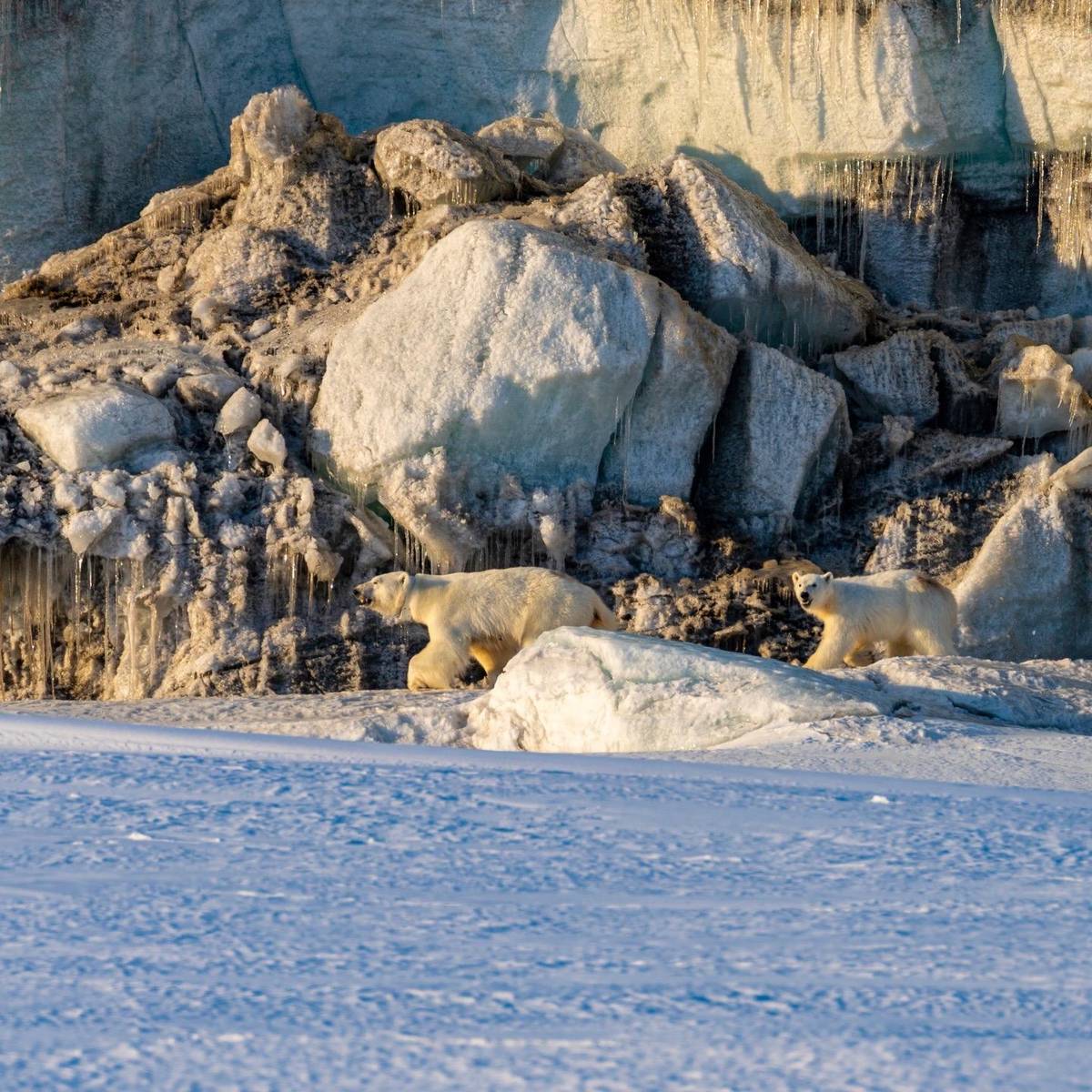
The Svalbard Environmental Act sets a general prohibition against unnecessarily disturbing, attracting or pursuing polar bears.4 New rules in force since 1 January 2025 added fixed distances.2 Everyone must keep at least 300 meters from a polar bear.2 From 1 March to 30 June, the minimum distance is 500 meters.3 The rules cover snowmobiles, boats and people on foot alike, for residents as well as visitors.
If you discover a bear at close range, you are obliged to retreat.5 That duty does not apply in inhabited areas or when staying at research stations, cabins, tents or similar facilities, where other precautions take over. The polar bear provisions apply on drift ice, on ice floes and in the water, as well as on land.14 There is no place in the archipelago where a bear may be chased or approached for a photograph.
Other animals have distance rules too. When travelling at sea you must keep at least 150 meters from walrus haul-out sites.15 Motorized traffic on the sea ice of selected fjords is banned after 1 March.16 In the protected areas covered by the landing regulation, tourist landings may only take place at mapped sites and together with a guide.1718 Your guide knows these rules and plans every trip around them.
The rules
| Rule | What it means | Source |
|---|---|---|
| No disturbance | Never disturb, attract or pursue a bear | Svalbard Environmental Act |
| 300 meters | Minimum distance most of the year | Governor of Svalbard |
| 500 meters | Minimum distance 1 March to 30 June | Governor of Svalbard |
| Retreat | Back off from a bear at close range | Governor of Svalbard |
| Bear watch | Awake, organized watch at campsites | Visit Svalbard |
| Report | Report any bear killed at once | Norwegian Polar Institute |
Summary of the rules; the Governor of Svalbard's own text governs.42351312
Situations
Follow the guideOutside the town limits
 No equipment needed
 Bear watch
Decision helper
Tap the situation
If one discovers a bear at close range, one is obliged to retreat.
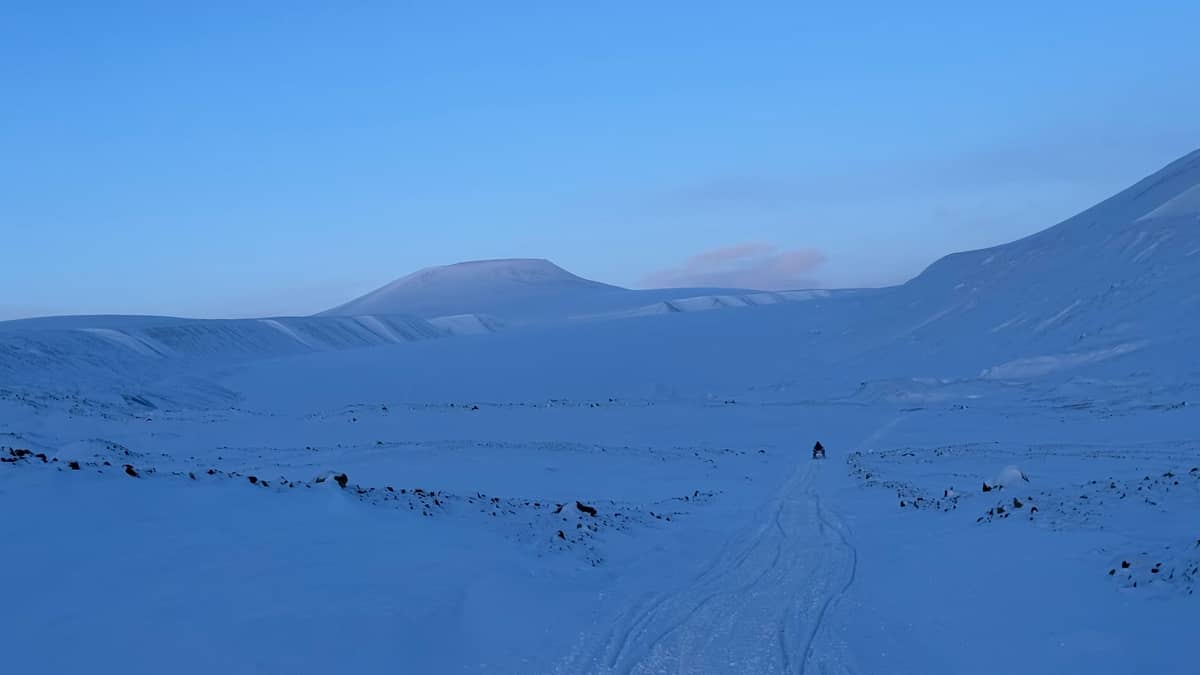
Visit Svalbard advises visitors not to leave the settlements without a professional guide from a local activity provider.19 Guides who lead tours outside the town limits of Longyearbyen always bring the required polar bear protection equipment, and long-range communication where there is no phone reception.6 On a guided trip you do not carry a weapon yourself; the guide does, and the guide decides when to move on.
The Norwegian Polar Institute's advice for anyone travelling outside the settlements is to always bring a gun for polar bear protection.20 Residents of Longyearbyen do the same and carry a firearm when they leave the settlements.21 In Longyearbyen itself there is a zone within which you do not have to carry polar bear protection equipment.22 Outside that zone the situation changes at once, which is why every guided group is equipped.6
Weapons are the last resort, not the plan. The tools that come before them are distance, attention and noise. If a polar bear is moving in your direction, yelling, hand clapping or racing an engine will often make it retreat.11 A flare gun is used to scare a bear away. Only when every other step has failed does a self-defence situation arise, and that is exactly what guides, rules and good planning are there to prevent.
Checklist
Cost calculator
Choose a guided trip and your group size to see the from-price.
Total from$1,436
pp from $718
Check availabilityfree cancellationArctic tour costs use the lowest listed GetYourGuide price per guest at the ECB conversion rate; the final total appears when you book.
Video
The film streams from YouTube only once you start it.
The 2020 incident happened at a campsite, and camping now has its own rules.1 Since 1 January 2025 there must always be an awake and organized polar bear watch at campsites.13 Camping that requires an application to the Governor must be secured with an alert and an organized polar bear guard when people are in the camp.23 Few short-stay visitors camp, but those who do need to plan around these rules.
Where you camp matters. The Norwegian Polar Institute advises avoiding camping on the beach, at glacier fronts, close to ravines, in small valleys and where polar bear tracks are seen.24 Polar bears are attracted to the smell of cooking, and cooking inside the tent is best avoided.25 Warning devices such as tripwires with flares at two heights, a guard dog or a watch rota help a camp detect a bear in time.26
For most travelers the simplest answer is to sleep in Longyearbyen and head out on guided day trips. A snowmobile day from town, such as the trip this site books, brings you back to a warm bed the same evening, after 8 hours in the field with a guide. That keeps the nights, the hardest part of polar bear safety, in the hands of a town built around these rules, and leaves you rested for the next day out.
A polar bear in town in Svalbard is not a far-fetched idea. Visit Svalbard says you may encounter polar bears in Svalbard all year.27 Longyearbyen has around 2,100 residents, and they live with the knowledge that a bear may at any time be closer than they think.28 Bears seen near the settlement are reported quickly, and the authorities act to move them away from homes, roads and the people walking along them.
As a visitor, the right response to a bear near town is simple. Go indoors or stay inside, keep away from the area, and follow any instructions from the authorities or your hotel. Do not try to get closer for a photograph, and do not follow the bear when it moves. The ban on disturbing, attracting or pursuing a polar bear applies just as much at the edge of town as on the sea ice.4
If you are outside the settlement with a guide and a bear appears, stay close to the group and do exactly what the guide says. The guide will keep the distance required by law and may decide to leave the area at once.25 Remember that the bear did nothing wrong by turning up; it lives here, and the rules exist to protect its life as much as yours. A calm, quiet group is a safe group.
Book guided trips for anything outside Longyearbyen, and choose operators who explain their polar bear routines before you set off. Ask how the guide handles a sighting, what protection they carry and how they communicate outside phone coverage.6 A good operator will answer gladly. If the answer is vague, choose another trip; Longyearbyen has plenty of guided options, from walks to snowmobile days.
Respect the distance rules at all times, even if a bear seems calm or far away: 300 meters for most of the year, and 500 meters from 1 March to 30 June.23 Use binoculars and long lenses instead of moving closer. If you are driving a snowmobile on a guided trip, stay in line behind the guide and never turn towards a bear, whatever the people around you do or say. The bear's space is never yours to cross.
Finally, keep your expectations honest. There are no organised tours on Svalbard aimed at seeking out polar bears, and whether you see one cannot be predicted.2930 Visitors who never see a bear still leave with stunning memories of ice, light and silence. Those who do see one usually see it far away, safely, and that is exactly how a polar bear sighting in the Arctic should always be.
Book your day
Hold your place now, pay nearer the time, and cancel free up to a day before.
The 2020 death was the fifth since 1971. High North News called the 2020 victim the fifth person killed by a polar bear in Svalbard since 1971.1
At least 300 meters. From 1 March to 30 June the minimum is 500 meters, set by law.23
Retreat. Anyone who discovers a bear at close range is obliged to retreat.5
No, the guide carries protection. Guides outside the town limits always bring polar bear protection equipment.6
Inside the town zone, yes. Longyearbyen has a zone where you do not need polar bear protection equipment.22
Yes, with a bear watch. Since 2025 campsites must have an awake, organized polar bear watch.13
It must be reported at once. Killing a polar bear must be reported immediately to the Governor of Svalbard.12
Sources
Keep reading