 About 300
Guides
Language
EnglishCurrency
US dollar · $GetYourGuide uses the currency you choose.
Guide · Polar bears
Are there polar bears in Svalbard? Yes, and here is how many
Survey counts, the bears that stay and the bears that wander, their size, their history with hunters and what it all means for your chance of seeing one on Svalbard.
Check availabilityfrom $718 · free to cancel
Editorial team, svalbardpolarbeartour.comUpdated October 16, 20267 minutes to read38 sources
Quick answer
- 01All year
- In Svalbard you may encounter polar bears at any time of year.1
- 02The region
- About 3,000 bears live in the Svalbard and Barents Sea region.2
- 03Residents
- About 300 stay on Svalbard all year round.3
- 04At most
- On Svalbard itself, fewer than a thousand at any time.4
- 05Protected
- Hunting has been banned since 1973.5
Are there polar bears in Svalbard? All year round
Yes, and not only in the far north or out on the drift ice. Visit Svalbard puts it simply: in Svalbard you may encounter polar bears all year.1 Residents of Longyearbyen take that seriously, and when they leave the settlements they carry a firearm as protection against polar bears.6 The bears are part of daily life in the archipelago, even for people who never set eyes on one in all their years there.
That does not mean bears walk the streets. Most of the time they are out on the sea ice, along remote coasts or on the eastern islands, far from the roads and trails around town. Polar bears depend on sea ice for hunting, moving, mating and sometimes resting.7 Where the ice goes, the bears tend to follow, and their numbers on Svalbard rise and fall through the seasons as the ice forms, drifts and melts again.
On Svalbard, polar bears have also been seen hunting Svalbard reindeer and eating eggs at bird cliffs.8 These are glimpses of how adaptable the animal is, not a reason to expect bears near town. For a visitor the honest picture is this: bears are always somewhere in the archipelago, a sighting is never guaranteed, and the chance of seeing one simply cannot be predicted.9 Plan your trip around that truth and you will not be disappointed.
History
Polar bears and people on Svalbard
-
About 1870
Intensive hunting begins
Some 300 bears a year were killed over the following century.10
-
1850 to 1973
Norwegian trappers
Overwintering hunters took polar bears and foxes for fur.11
-
1973
Hunting banned
The population probably grew considerably afterwards.5
-
2004
Aerial survey
The Barents Sea estimate came to 2,650 bears.12
-
2015
New count
The Norwegian part showed no sign of a decline.13
-
2025
Distance rules
How many polar bears are in Svalbard
If you want to know how many polar bears are in Svalbard, you first need to know which population you mean. The bears of Svalbard belong to a larger group shared by Norway and Russia across the Barents Sea, and they do not stop at borders on the ice. An aerial survey in 2004 estimated that subpopulation at 2,650 bears, give or take about 30 percent.12 The same work put the range between 1,900 and 3,600 bears.16
Visit Svalbard gives a rounder figure: the population in the Svalbard and Barents Sea region is estimated at around 3,000 bears.2 Of these, about 300 remain on Svalbard all year, while some migrate between the archipelago and Franz Josef Land.3 The number on Svalbard itself varies through the year, with a likely maximum of fewer than a thousand.4 Those are estimates for a wild animal on moving ice, not a census.
A newer survey of the Norwegian part of the population was carried out in August 2015, and its results showed no sign of a reduction in population size.13 For scale, Polar Bears International counts about 26,000 polar bears across the polar regions, divided into 19 populations.17 The Barents Sea bears are a modest share of that world total, spread over a vast area of sea, ice and islands.
Key figures
Polar bear numbers at a glance
| Figure | Number | Source |
|---|---|---|
| Worldwide | about 26,000 | Polar Bears International |
| Barents Sea, 2004 | 2,650 | Norwegian Polar Institute |
| Range in 2004 | 1,900 to 3,600 | Norwegian Polar Institute |
| Svalbard and Barents region | about 3,000 | Visit Svalbard |
| On Svalbard all year | about 300 | Visit Svalbard |
| Weight of a grown bear | 200 to 800 kg | Visit Svalbard |
Who is where
Svalbard's bears, by where they live
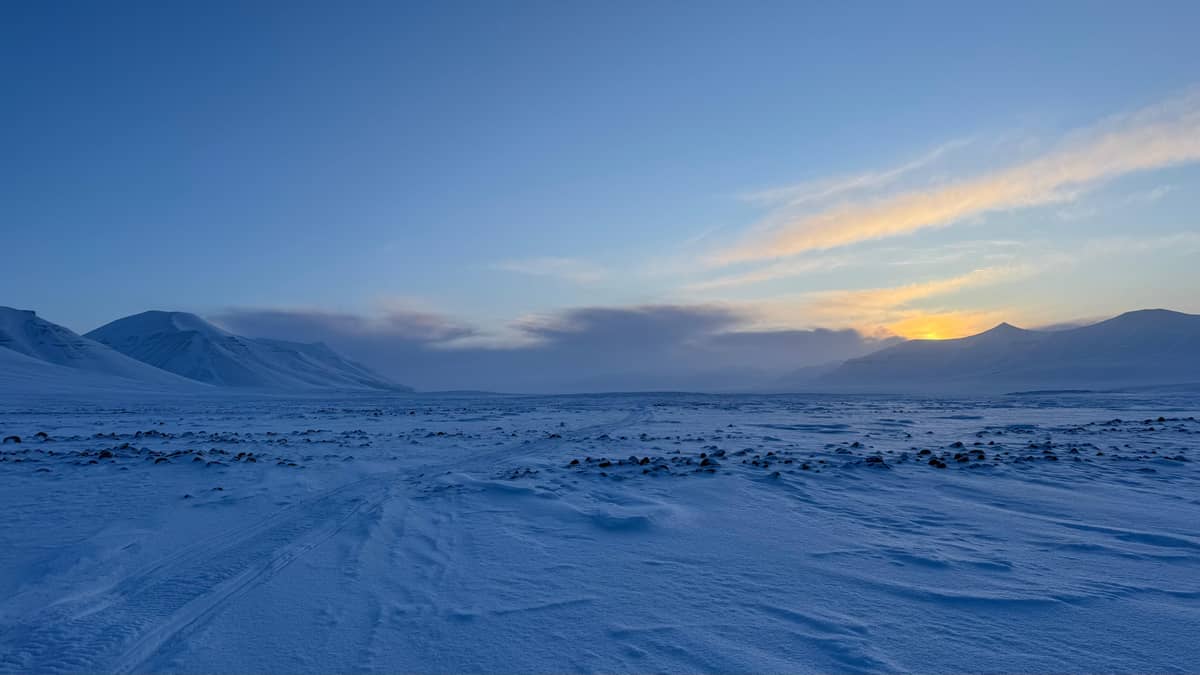
About 300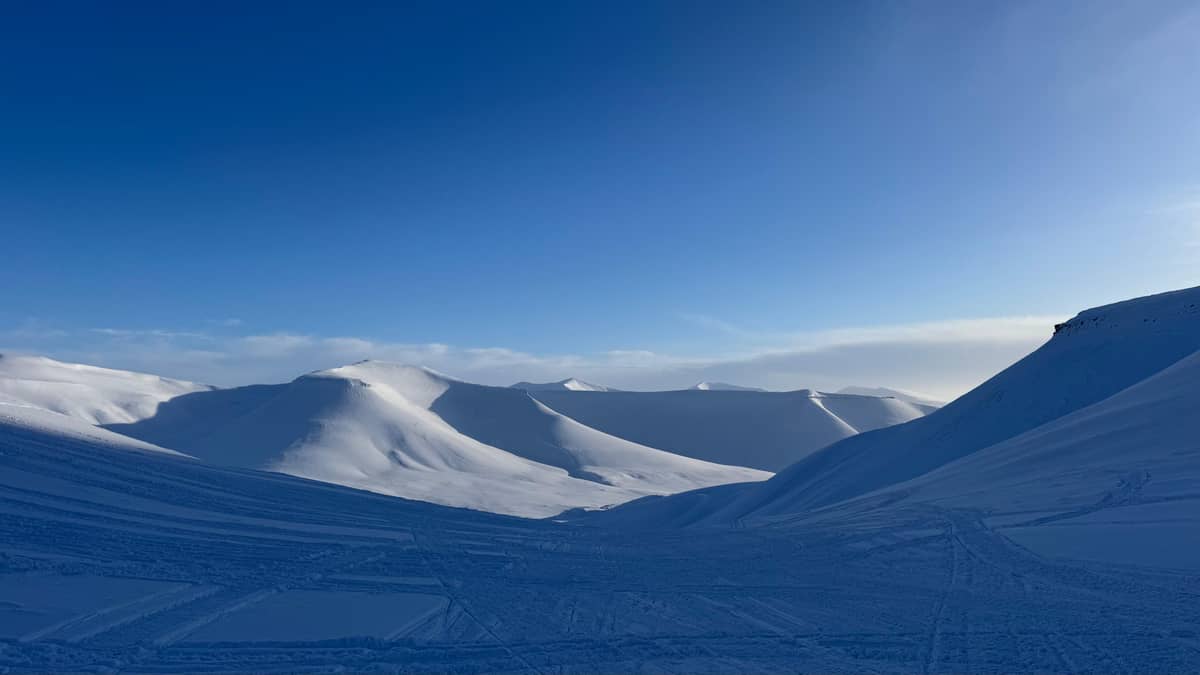 On the move
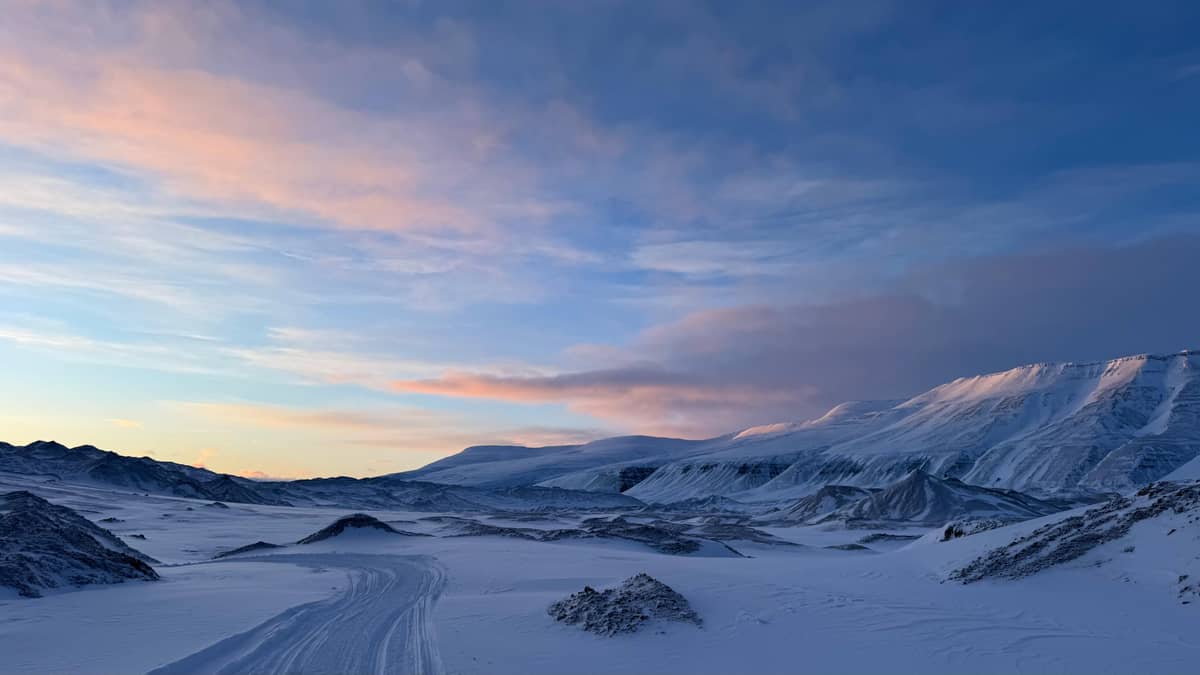 Autumn ice
Decision helper
What are you really asking?
Tap the question closest to yours
Possible all year
Bears may be encountered in Svalbard at any time of year.1
About 3,000
In the Svalbard and Barents Sea region.2
No sign in 2015
The survey of the Norwegian part found no reduction.13
No
No organised tours on Svalbard seek out polar bears.19
Climate warming
The 2021 Norwegian Red List names it the main threat.20
Of these, about 300 remain on Svalbard year-round, while some migrate between the archipelago and Franz Josef Land.
Residents and wanderers on the sea ice
Not every bear seen around Svalbard lives there. Scientists separate the bears that stay near the islands from those that roam the pack ice further north. The aerial survey of 2015 indicated that the number of local bears had not changed much since the survey of 2004.21 The bears that live north in the pack ice in autumn have most likely been stable or even increased between the surveys, according to the Norwegian Polar Institute's monitoring.22
Pregnant females have their own calendar. They need sea ice in autumn to reach the islands where they dig their dens. Fewer than 30 days with a 60 percent ice cover in autumn means pregnant females struggle to reach the denning areas in time, especially distant islands such as Hopen, Kongsøya and Kvitøya.23 Those islands lie far from Longyearbyen and are off limits to ordinary visitors.
The body condition of Barents Sea bears tells a mixed story. It fell up to the year 2000 and then rose over the next two decades despite a significant loss of sea ice.24 Even so, the bear is assessed as Vulnerable on the 2021 Norwegian Red List, and climate warming is named as the main threat.20 Researchers keep counting, measuring and tracking bears to see how they cope as the ice changes.
Checklist
Living with bears, the visitor's version
01
Do
- Leave the settlement only with a guide
- Follow every instruction your guide gives
- Bring binoculars for distant sightings
- Book trips that suit the season
02
Never
- Approach, follow or feed a bear
- Wander beyond town on your own
- Leave food out at a campsite
- Block a bear's path
Cost calculator
A day in polar bear country
Choose a guided trip and the group size to see the from-price.
People
Total from$1,436
pp from $718
Check availabilityfree cancellationArctic tour costs use the lowest listed GetYourGuide price per guest at the ECB conversion rate; the final total appears when you book.
Video
a POLAR BEAR is super close to OUR TOWN | How Longyearbyen handles Polar Bears on Svalbard
The film streams from YouTube only once you start it.
From hunted to protected
For a long time polar bears were a resource on Svalbard, hunted for fur and meat. A period of intensive hunting in and around the archipelago began about 1870, and in the following 100 years an average of some 300 bears were killed each year.10 Norwegian overwintering hunters and trappers worked the islands from 1850 to 1973, chasing polar bears and Arctic foxes for their thick winter furs.11
Some of those trappers became legends. Henry Rudi, known as the Polar Bear King, killed around 750 polar bears in the archipelago, including 115 in a single year.25 Their huts still stand along many coasts, and Svalbard's museums tell their stories in detail. Seen from today, those numbers explain why the bears needed protection, and they show how quickly a large animal with a slow breeding rate can be pushed down by steady hunting.
The turning point came in 1973, when hunting was banned.5 The population probably increased considerably in the years that followed.5 Polar bears have been protected by international law since 1973, and hunting has been completely banned on Svalbard since the same year.26 Today the law goes further still and forbids disturbing, attracting or pursuing a bear without need, on land as well as on the ice.27
The size of a Svalbard polar bear
The size of a Svalbard polar bear surprises most people who see one. A grown bear weighs from 200 to 800 kg.18 Visit Svalbard adds that even young animals under 100 kg can be very aggressive and dangerous.28 Polar bears move silently and can attack quickly and without warning.29 On the ice a bear looks slow and calm, yet it covers ground with ease, swims well and can appear from behind a ridge before anyone has noticed it.
Their history is written into Svalbard's own rocks. A polar bear jawbone found at Poolepynten on Prins Karls Forland, on the far western edge of the archipelago, has been dated to between 130,000 and 110,000 years old.3031 It shows that the polar bear was already a distinct species at least 110,000 years ago.32 Bears have lived around these islands through ice ages and warm periods alike.
For visitors, size is the reason distance matters. Since 1 January 2025 everyone on Svalbard must keep at least 300 meters from a polar bear.14 Between 1 March and 30 June the minimum is 500 meters.15 At those distances even a large male looks small, and good binoculars or a long lens are the honest tools for seeing a bear well, for your own safety and for the bear's. A guide will help you set them up long before a bear comes into view.
Seeing one: odds, rules and respect
Visit Svalbard is direct about the odds. When people ask whether there is a good chance of seeing a polar bear, or when the best time of year is, the answer is that it simply cannot be predicted.9 In the Sunny Winter season, which runs from 1 March to 16 May, the tourist board describes sightings as relatively rare.3334 That is not a reason to stay home, only a reason to travel for the landscape as much as for the bear.
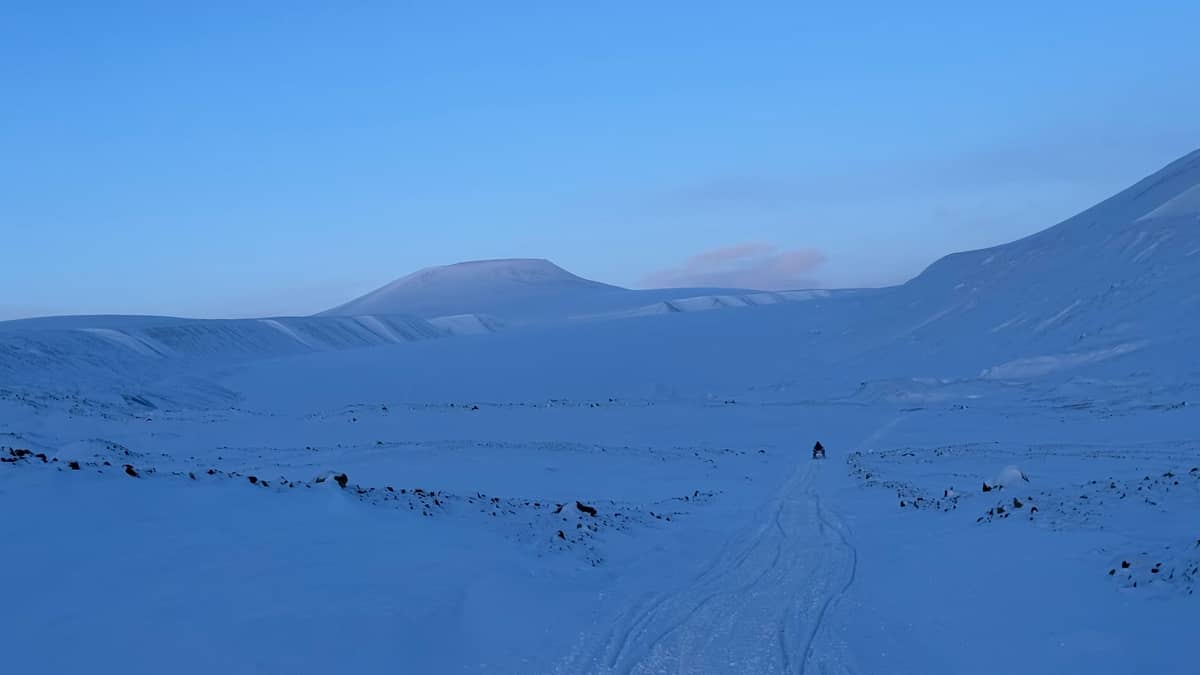
There are no organised tours on Svalbard aimed at seeking out polar bears.19 What you can book are guided days in polar bear country, on snowmobiles in winter or on boats in summer, with guides who always carry polar bear protection outside the town limits.35 Visit Svalbard advises visitors not to venture out of the settlements without a professional guide from a local activity provider.36
If you do see a bear, it will usually be at a distance, and that is how it should be. Watch it calmly, let it move on and follow your guide's instructions to the letter. Anyone who finds a bear at close range is obliged to retreat.37 A distant bear on the sea ice, seen through binoculars on a clear spring day, is one of the great sights of the Arctic and needs no closer approach to stay with you.
Book your day
A day on the snow towards Van Mijenfjorden
Hold your place now, pay nearer the time, and cancel free up to a day before.
You ask,we answer.
Are there polar bears in Svalbard all year?
Yes. Visit Svalbard says you may encounter polar bears in Svalbard all year.1
How many polar bears live around Svalbard?
Around 3,000 in the wider region. That is the Svalbard and Barents Sea region; about 300 stay on Svalbard all year.23
Are there more bears than people in Svalbard?
Not in Longyearbyen. Around 2,100 people live in the town, and fewer than a thousand bears are on Svalbard at any time.384
Is the population falling?
Not according to the 2015 survey. The survey of the Norwegian part showed no sign of a reduction in population size.13
How heavy is a polar bear?
Up to 800 kg. A grown bear weighs from 200 to 800 kg, as Visit Svalbard states.18
When was hunting banned?
In 1973. The population probably increased considerably in the years after the ban.5
Can I go and look for a bear myself?
No, and the law forbids pursuit. Disturbing, attracting or pursuing polar bears without need is prohibited.27
Sources
Evidence for this guide
- 1Visit SvalbardAbout Svalbard↩
- 2Visit SvalbardPolar bears↩
- 3Visit SvalbardPolar bears↩
- 4Visit SvalbardPolar bears↩
- 5Norwegian Polar Institute (MOSJ)Polar bear | MOSJ↩
- 6Visit SvalbardAbout Svalbard↩
- 7Visit SvalbardPolar bears↩
- 8Visit SvalbardPolar bears↩
- 9Visit SvalbardPolar bears↩
- 10Norwegian Polar Institute (MOSJ)Polar bear | MOSJ↩
- 11Visit SvalbardAbout Svalbard↩
- 12Norwegian Polar Institute (MOSJ)Polar bear | MOSJ↩
- 13Norwegian Polar Institute (MOSJ)Polar bear | MOSJ↩
- 14Visit SvalbardPolar bears↩
- 15Visit SvalbardPolar bears↩
- 16Norwegian Polar Institute (MOSJ)Polar bear | MOSJ↩
- 17Visit SvalbardPolar bears↩
- 18Visit SvalbardAbout Svalbard↩
- 19Visit SvalbardPolar bears↩
- 20Norwegian Polar Institute (MOSJ)Polar bear | MOSJ↩
- 21Norwegian Polar Institute (MOSJ)Polar bear | MOSJ↩
- 22Norwegian Polar Institute (MOSJ)Polar bear | MOSJ↩
- 23Norwegian Polar Institute (MOSJ)Polar bear | MOSJ↩
- 24Norwegian Polar Institute (MOSJ)Polar bear | MOSJ↩
- 25Visit SvalbardAbout Svalbard↩
- 26Visit SvalbardPolar bears↩
- 27The Governor of SvalbardNew environmental regulations enters into force on 1 January↩
- 28Visit SvalbardAbout Svalbard↩
- 29Visit SvalbardPolar bears↩
- 30PNAS (Lindqvist et al. 2010), via PubMed CentralComplete mitochondrial genome of a Pleistocene jawbone unveils the origin of polar bear↩
- 31PNAS (Lindqvist et al. 2010), via PubMed CentralComplete mitochondrial genome of a Pleistocene jawbone unveils the origin of polar bear↩
- 32PNAS (Lindqvist et al. 2010), via PubMed CentralComplete mitochondrial genome of a Pleistocene jawbone unveils the origin of polar bear↩
- 33Visit SvalbardSunny Winter↩
- 34Visit SvalbardSunny Winter↩
- 35Visit SvalbardStay safe in Svalbard↩
- 36Visit SvalbardStay safe in Svalbard↩
- 37The Governor of SvalbardNew environmental regulations enters into force on 1 January↩
- 38Visit SvalbardAbout Svalbard↩
Keep reading