 Snowmobiles
Sunny Winter
Snow, ice and returning light
- Months
- March to mid-May
- Highlight
- midnight sun from April
Guides
Language
EnglishCurrency
US dollar · $GetYourGuide uses the currency you choose.
Guide · Best time
Nobody can name a month that brings a bear. What you can choose is the season: snowmobiles in spring light, boats under the midnight sun, or the long dark of the polar night.
Editorial team, svalbardpolarbeartour.comUpdated October 16, 20267 minutes to read20 sources
In short
It is the question every traveler asks, and the people who know Svalbard best refuse to answer it with a month. Visit Svalbard writes that the answer to when the best time of year is to see a polar bear is that it simply cannot be predicted.1 The bear is a wild, roaming animal in a vast landscape of sea, ice and mountains, and it keeps no calendar that a visitor could plan around.
That does not make the choice of month meaningless. It changes the question. Instead of asking which month brings a bear, ask which season suits the trip you want, how much light you need, how cold you are willing to be and whether you would rather travel over snow or water. Each of Svalbard's seasons gives you a different way into polar bear country, and each carries its own small chance of a distant sighting.
Bears are present all year. Visit Svalbard says you may encounter polar bears in Svalbard at any time of year.6 What changes from season to season is where they are likely to be, how far you can travel from Longyearbyen and how much of the day you can see anything at all. The sections below walk through the year as Visit Svalbard divides it, from the polar night to the midnight sun.
The year
October to February
Dark months; the polar night runs mid-November to late January.4
1 March
Snowmobile season until 16 May.2
1 March to 30 June
The minimum distance to a bear rises to 500 meters.5
20 April
The sun stays up around the clock.7
Mid-May
Boats and hikes until late September.3
The chances of seeing polar bears in Svalbard are never zero and never certain. Visit Svalbard divides the year into its main seasons: the Northern Lights winter, the Sunny Winter and the polar summer. In the Sunny Winter, when people head out by ski, dog sled or snowmobile, the tourist board describes polar bear sightings as relatively rare.8 In summer, boats reach coasts that are far harder to visit when the fjords are frozen.
Polar bears depend on sea ice for hunting, moving, mating and sometimes resting.9 That link between bear and ice is why the season matters, even if no month can be promised. In late winter and spring there is ice in many fjords and along the coasts; in summer the open water lets ships travel far, and the remaining ice lies further north. A day tour from Longyearbyen covers only a small part of that huge area, in any season.
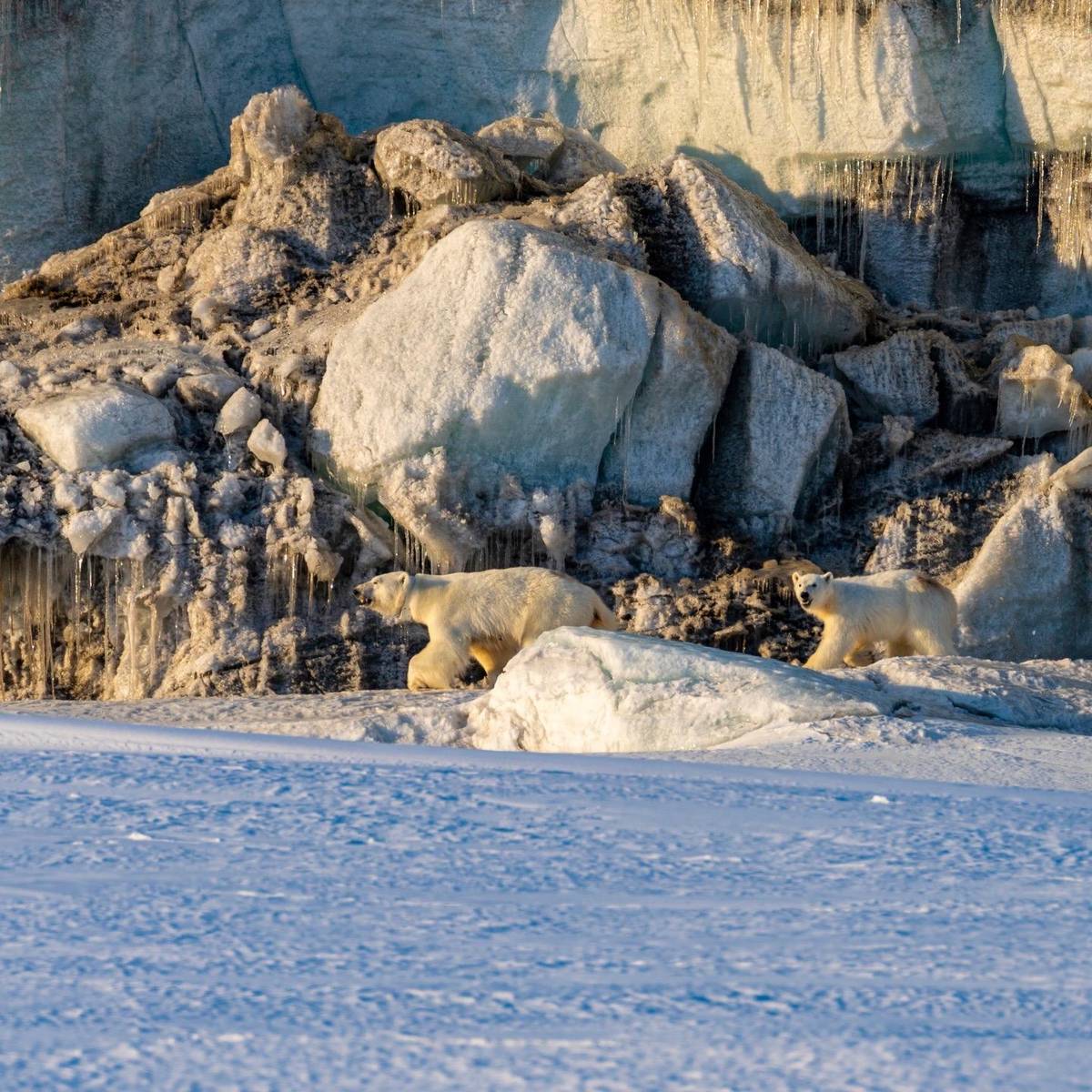
Rules shape the season too. From 1 March to 30 June, anyone who sees a polar bear must keep at least 500 meters away; for the rest of the year the minimum is 300 meters.510 Motorized traffic on the sea ice of selected fjords is banned after 1 March.11 None of that lowers the odds of a sighting, but it does mean that a bear seen in spring is usually a small figure on the ice, far across the snow.
Climate
Seasons compared
| Season | Months | Travel by | Light |
|---|---|---|---|
| Northern Lights winter | October to February | Snowmobile, dog sled | Polar night mid-Nov to late Jan |
| Sunny Winter | 1 March to 16 May | Snowmobile, ski, dog sled | Midnight sun from 20 April |
| Polar summer | Mid-May to late September | Boat, hiking | Long days |
Pick a season
SnowmobilesSnow, ice and returning light
 Boats
BoatsOpen water and green tundra
 Polar night
Darkness and auroras
Decision helper
Choose what matters most to you
The answer is that it simply cannot be predicted.
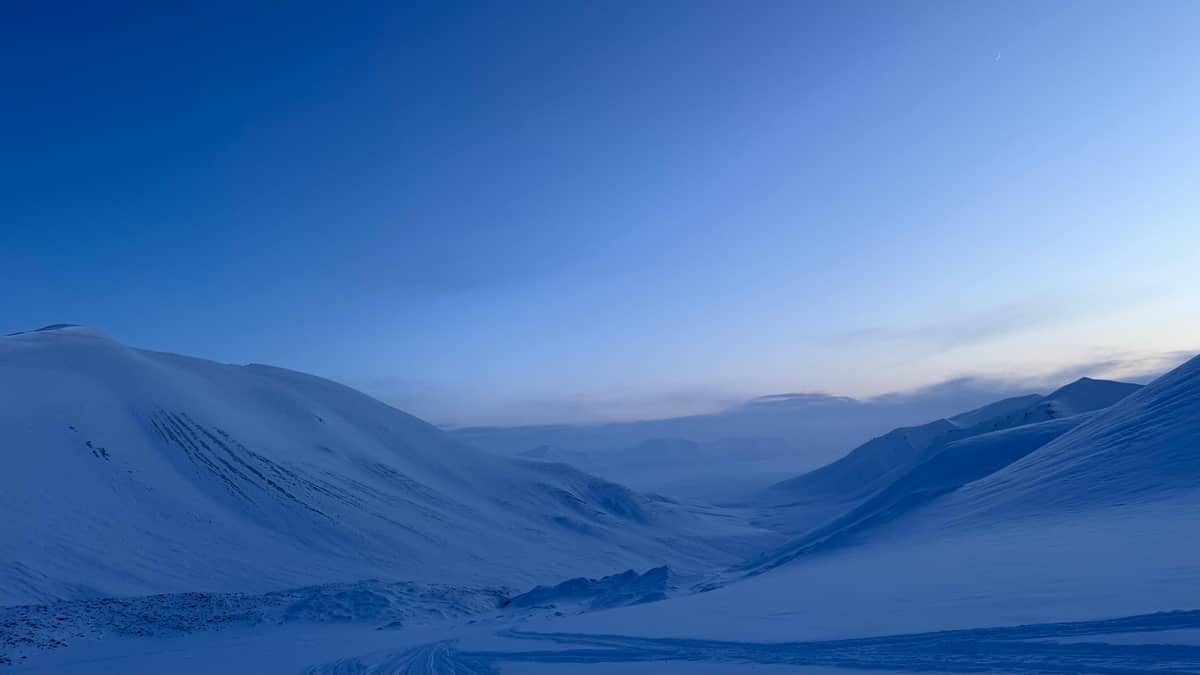
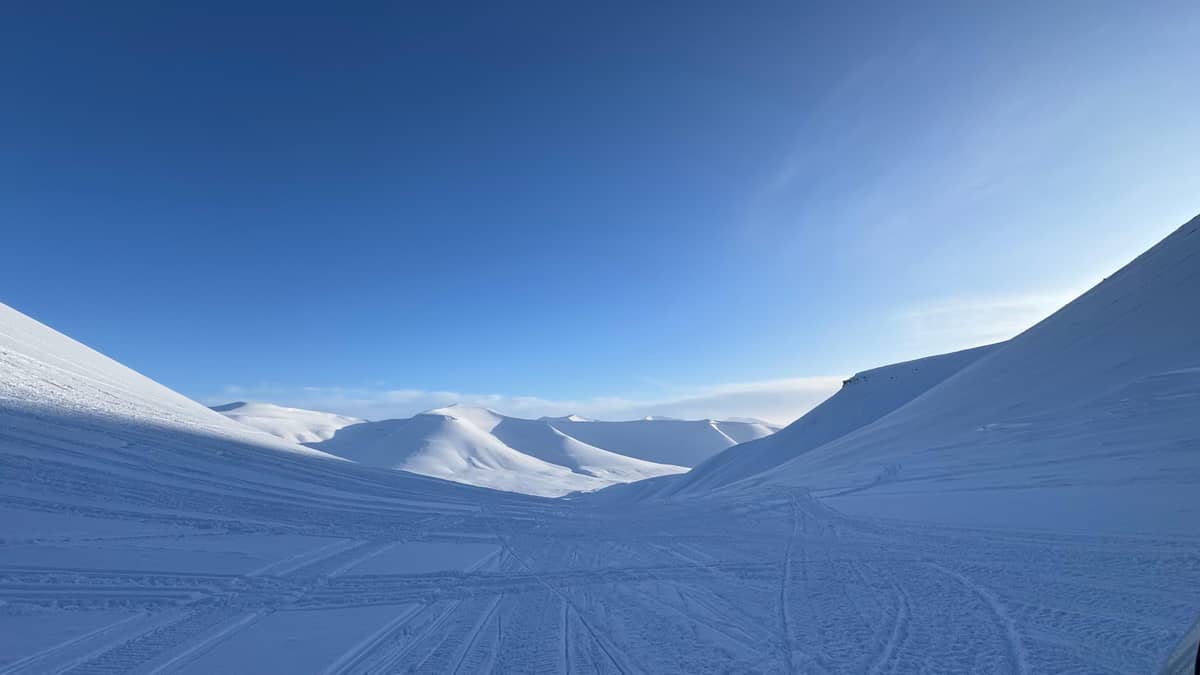
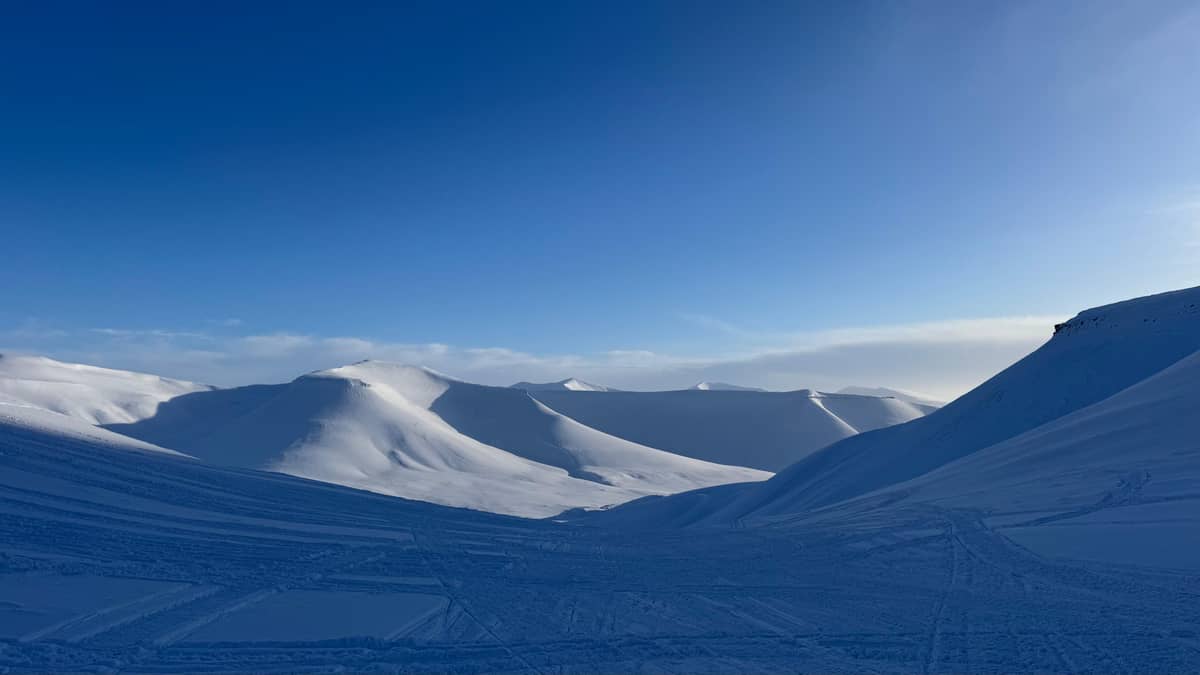
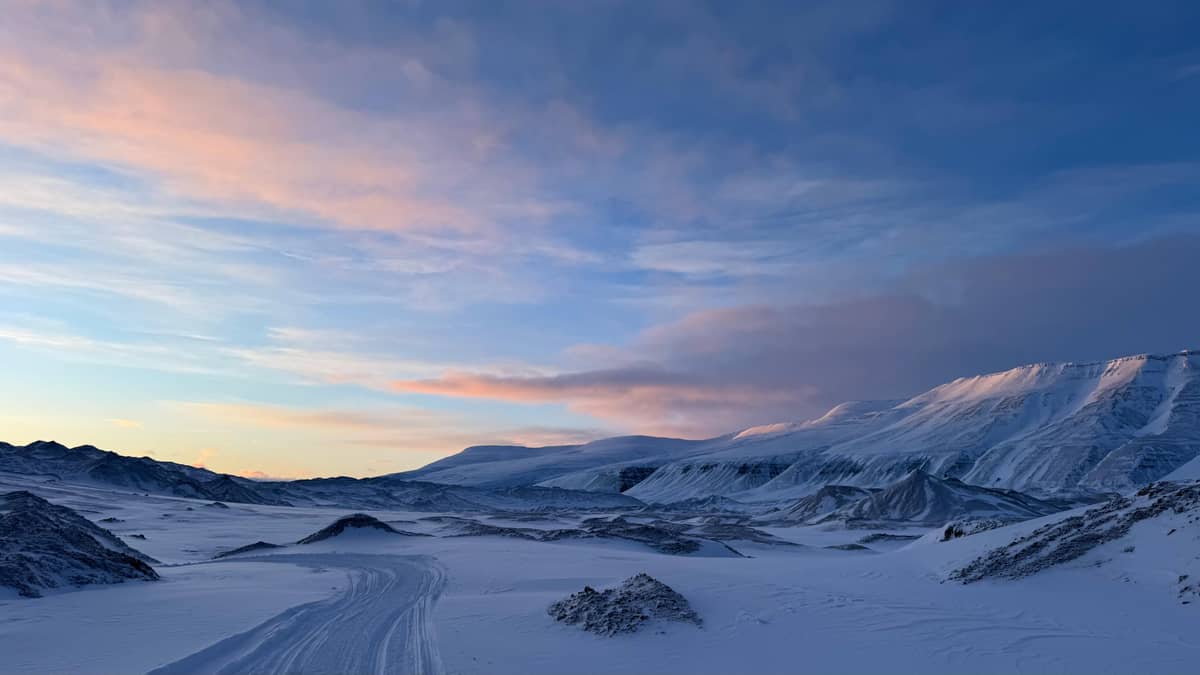
The Sunny Winter runs from 1 March to 16 May, and it is the season of snowmobile days such as the trip this site books.2 Light returns fast after the dark months, and the change from one week to the next is striking. Mid-March brings 10.2 hours of sun at Svalbard Airport, and mid-April already 19.1212 From 20 April the midnight sun lasts around the clock, and the snow glows long into what would be night elsewhere.7
It is also cold, and the cold is dry and sharp. The average daily high in March is -8.8 °C and the low is -15.5 °C.12 By April the average high has climbed to -5.7 °C, with a low of -12.1 °C.12 Precipitation is low, at 15 mm in March and 9 mm in April on average.1212 Dress in layers, protect your face and hands, and expect the wind on a moving snowmobile to feel much colder than the thermometer says.
For a snowmobile day the conditions are ideal: snow on the valleys, ice in many fjords and long hours of light. The snowmobile trip booked on this site runs for 8 hours into Reindalen and towards Van Mijenfjorden, from $718 per person. Remember that the tourist board calls bear sightings in this season relatively rare, and enjoy the landscape whether or not a bear appears on the horizon.8
Checklist
Cost calculator
Pick a trip and your group size to see the from-price.
Total from$1,436
pp from $718
Check availabilityfree cancellationArctic tour costs use the lowest listed GetYourGuide price per guest at the ECB conversion rate; the final total appears when you book.
Video
The film streams from YouTube only once you start it.
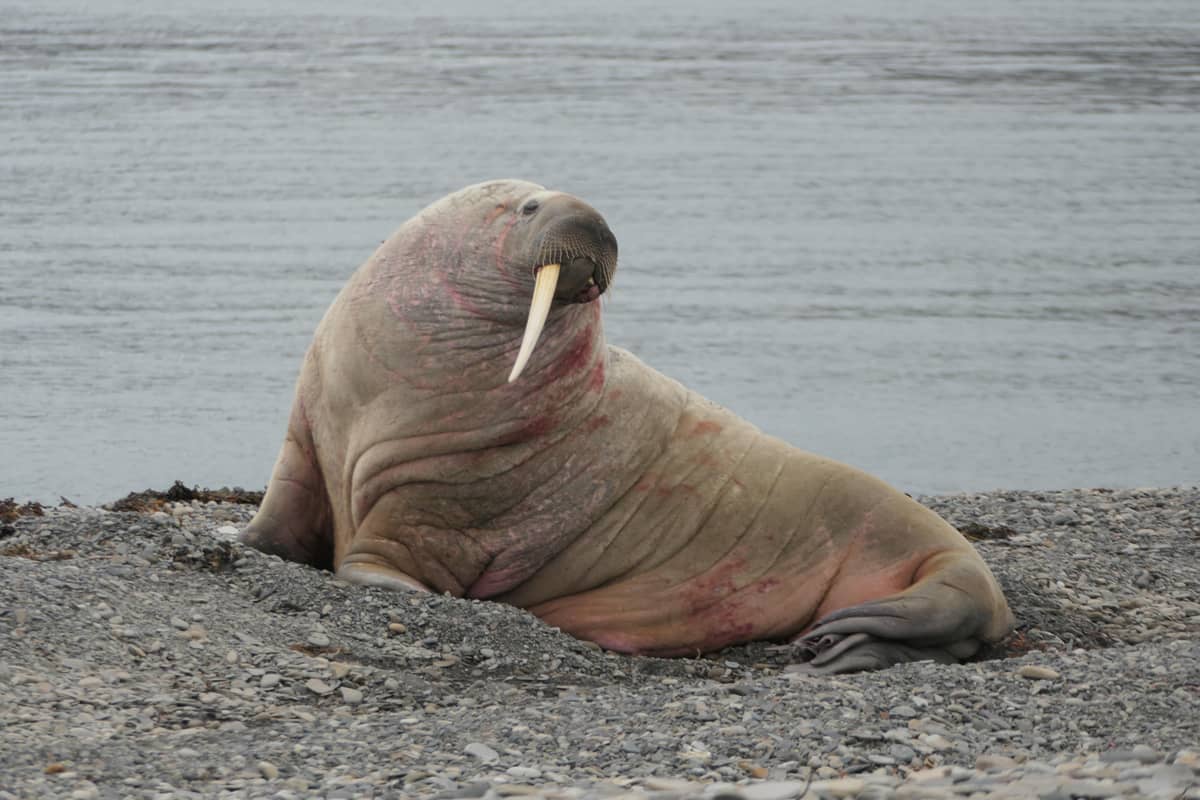
Visit Svalbard's polar summer stretches from mid-May to late September.3 In May the sun no longer sets: at mid-month it stays above the horizon for all 24 hours.12 June, July and August bring the warmest weather of the year, with an average daily high of 9.4 °C in July at Svalbard Airport.12 The tundra turns green, birds nest on the cliffs and walruses haul out on the beaches, and the light never fades from the sky.
Summer is the season of boats. A 6-hour Arctic boat trip with a glacier stop and wildlife viewing starts from $378. A 9-hour boat day to Pyramiden starts from $503. Expedition cruises sail around the islands and towards the remaining sea ice, the places where bears spend more of the summer. Snowmobile trips do not run once the snow has gone, and the valleys turn to wet tundra.
On summer boat trips the distance rule applies everywhere: at least 300 meters from a bear, and 500 meters until 30 June.105 In the protected areas covered by the landing regulation, tourist landings may only take place at mapped sites and together with a guide.1314 If a bear is seen on shore, the boat keeps its distance, and binoculars or a long lens become the right way to look at it, calmly and from the deck.
From October to the end of February, Visit Svalbard calls the season the Northern Lights winter. At its heart lies the polar night, from mid-November to late January, when the sun never rises above the horizon.4 At Svalbard Airport the sun shows for 0 hours at mid-December.12 Longyearbyen glows with lights through the long evenings, and with luck the northern lights can even appear in the middle of the day.
The cold settles in for months. The average daily high is -6.1 °C in December and -7.7 °C in January, with lows of -12.2 °C and -14.2 °C.1212 Snowmobile trips, dog sledding and northern lights tours run in the dark months, but every outing is shaped by the lack of light. A bear in the dark is a bear nobody sees until it is close, which is exactly the situation guides work hardest to avoid.
For a polar bear trip, the polar night is the least promising time to hope for a sighting. It is, however, an extraordinary time to experience Svalbard: the blue light of midday, the silence of the frozen valleys and the stars over Isfjorden. Come for that, keep your expectations about bears low, and leave the settlement only with a guide who carries the right protection.15 In the dark, short trips close to town make good sense for a first visit.
If you hope to see polar bears in Svalbard, a guided trip from Longyearbyen is the sensible place to start. Visit Svalbard advises visitors not to leave the settlements without a professional guide from a local activity provider.16 There are no organised tours on Svalbard aimed at seeking out polar bears.17 What a guide offers is safe travel in bear country, with protection and a plan for any encounter.
Do not go looking on your own. The Svalbard Environmental Act forbids disturbing, attracting or pursuing polar bears without need.18 Anyone who finds a bear at close range is obliged to retreat.19 In Longyearbyen there is a zone within which you do not need to carry polar bear protection, but outside it the rules and the risks change at once.20 Ask at your hotel or the tourist office where that line runs before you walk anywhere.
The best preparation for any season is the same. Choose a trip that suits the light and the temperature you are comfortable with, bring binoculars, set your camera for long distances and treat every bear as a distant gift rather than a target. Whether you travel in March, July or December, the right attitude matters more than the right month, and it will make your days in polar bear country better either way.1
Book your day
Hold your place now, pay nearer the time, and cancel free up to a day before.
No month can be named. Visit Svalbard says the best time of year to see a bear cannot be predicted.1
From 1 March to 16 May. That is Visit Svalbard's Sunny Winter, when snowmobile days run from Longyearbyen.2
From 20 April. From then on the sun stays above the horizon around the clock.7
Mid-November to late January. The sun never rises in Svalbard during that period, and the light is a deep blue at midday.4
An average high of -8.8 °C. The average low in March at Svalbard Airport is -15.5 °C, and wind makes it feel colder.12
Yes, all year. You may encounter polar bears in Svalbard at any time of year.6
Yes, the distance grows. From 1 March to 30 June the minimum distance to a bear is 500 meters.5
Sources
Keep reading