 Origins
The ancestors
Brown bears on the coast
- Split
- about 152,000 years ago
- Closest kin
- Alaska's ABC islands
Guides
Language
EnglishCurrency
US dollar · $GetYourGuide uses the currency you choose.
Guide · Origins
A short natural history: the brown bear ancestors, a fossil jawbone from Svalbard's own coast, the sea ice that carries bears between islands, and the hunters who nearly wiped them out.
Editorial team, svalbardpolarbeartour.comUpdated October 16, 20266 minutes to read27 sources
Quick answer
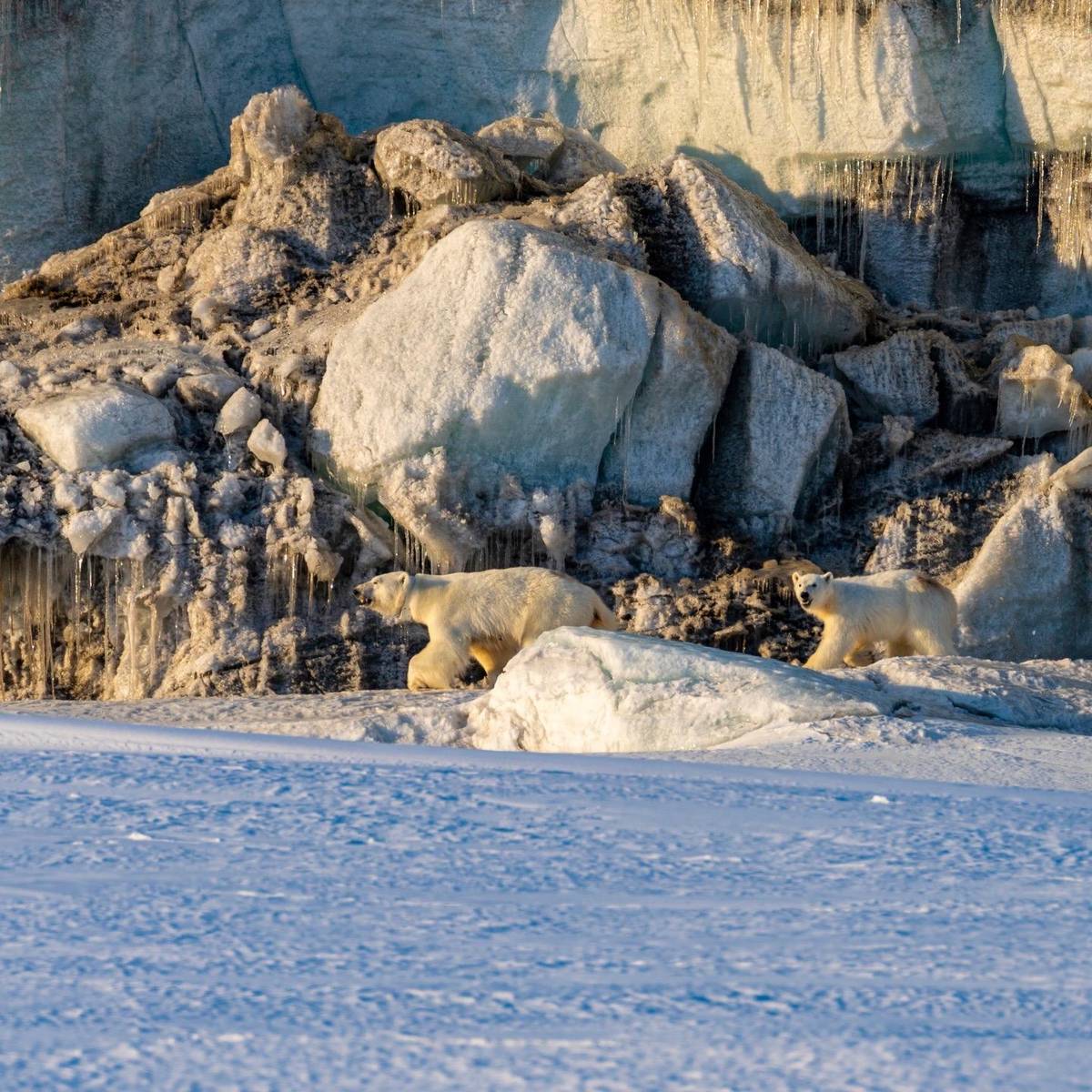
The short answer to how did polar bears get to Svalbard is that they walked and swam, across the sea ice that links the archipelago with the wider Arctic. Polar bears depend on sea ice for hunting, moving, mating and sometimes resting.1 Svalbard is a group of islands in the Arctic Ocean, and in winter and spring the ice joins its coasts to the pack ice further north and east, a frozen bridge for any bear on the move.
That traffic has never stopped. About 300 bears stay on Svalbard all year, while others migrate between the archipelago and Franz Josef Land, the Russian islands to the east.2 The bears of Svalbard belong to a population shared by Norway and Russia across the Barents Sea, estimated in 2004 at 2,650 bears, give or take about 30 percent.6 To a polar bear, the border between the two countries means nothing.
The ice is also what brings pregnant females to the islands where they den. Fewer than 30 days with a 60 percent ice cover in autumn means pregnant females struggle to reach the denning areas in time, especially distant islands such as Hopen, Kongsøya and Kvitøya.7 In a real sense, Svalbard's bears arrive with the ice each year, and the timing of that ice decides where they can raise their cubs.
Deep time
152,000 years ago
Mean age of the split in a 2010 mitochondrial study.8
130,000 to 110,000 years ago
A jawbone from Svalbard's west coast.3
About 1870
Some 300 bears a year were killed for a century.9
1973
Hunting banned on Svalbard and by international law.10
2015
The Norwegian part showed no sign of a decline.11
Polar bears are a young species by the standards of evolution. Genetic studies have shown that polar bears evolved from within brown bears, and that the brown bears living only on the Admiralty, Baranof and Chichagof islands of southeastern Alaska are more closely related to polar bears than other brown bears are.4 The polar bear's ancestor was a brown bear that took to the ice and the seals that live on it.
How long ago that happened has been debated for decades, and different methods give different answers. A 2010 study in the journal PNAS used mitochondrial DNA from an ancient polar bear and estimated the mean age of the split between those Alaskan brown bears and polar bears at 152,000 years, and the mean age of all polar bears at 134,000 years.8 Other studies, using other parts of the genome, have reached older dates.
What is clear is how quickly the polar bear became a specialist. It grew a white coat and came to live on drifting ice far from land, and today it is entirely dependent upon seals that live in the ice.12 It is also entirely dependent on sea ice for hunting, movement and mating, a way of life no brown bear shares.1 That dependence is both the key to its success and the reason for its present vulnerability.
Evidence
| Finding | Evidence | Source |
|---|---|---|
| Brown bear ancestry | Genetic studies | PNAS 2010 |
| Distinct species 110,000 years ago | Svalbard jawbone | PNAS 2010 |
| Bears follow the ice | Sea ice dependence | Visit Svalbard |
| Travel to Franz Josef Land | Migrating bears | Visit Svalbard |
| Recovery after 1973 | Population trend | Norwegian Polar Institute |
Decision helper
Pick a question
We show that the phylogenetic position of the ancient polar bear lies almost directly at the branching point between polar bears and brown bears.
Some of the best evidence for the polar bear's early history comes from Svalbard itself. A lower jawbone was excavated at Poolepynten on Prins Karls Forland, a narrow strip of land on the far western edge of the archipelago.15 Dating of the surrounding sediments placed it at between 130,000 and 110,000 years old.3 When the study was published, it was significantly older than any other known polar bear fossil.16
The researchers sequenced a complete mitochondrial genome from the bone, and the result surprised them. The ancient polar bear lies almost directly at the branching point between polar bears and brown bears, a rare fossil link between living species.14 The jawbone also shows that the polar bear was already a distinct species at least 110,000 years ago.13 Few fossils tell a story this clearly.
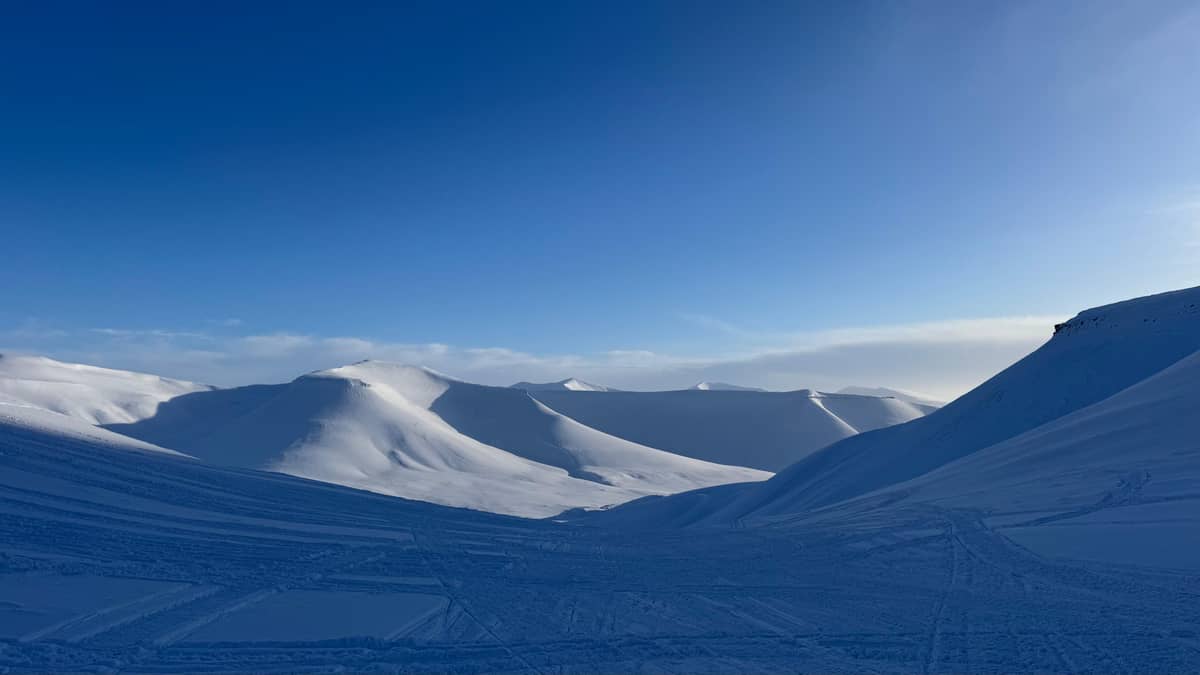
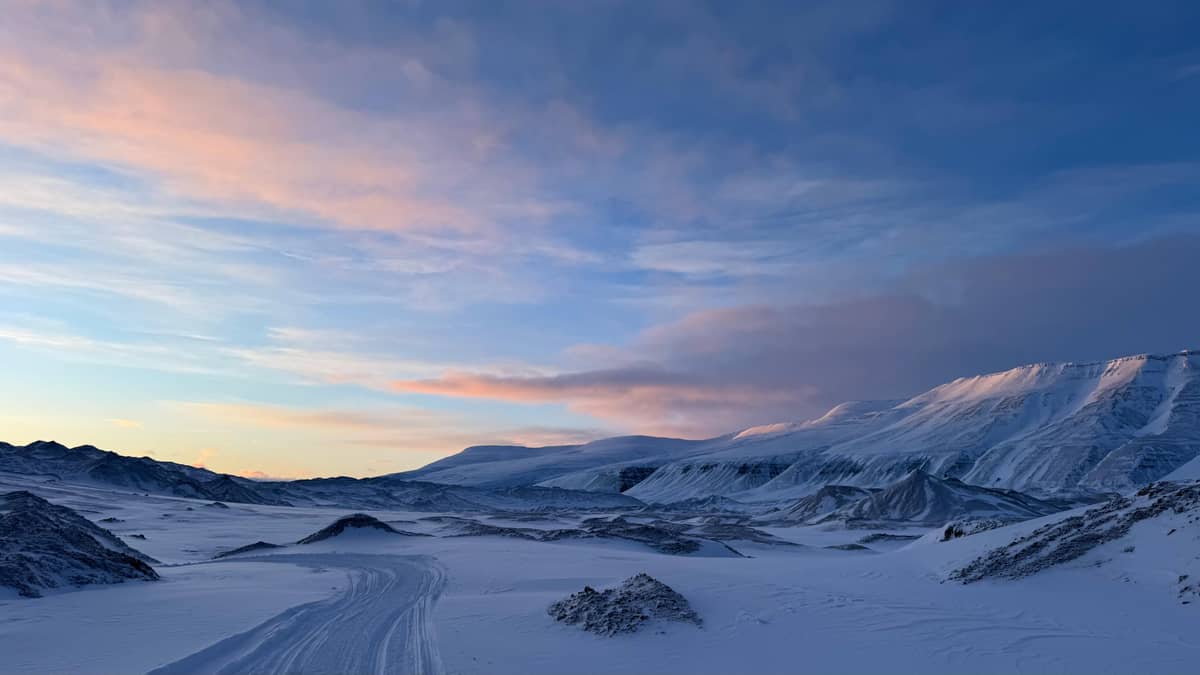
In other words, polar bears were living around Svalbard long before the last ice age reached its peak, and long before any people came to these islands. When you look out over the ice from Longyearbyen today, you see a landscape that bears have used for a very long time. Visitors, trappers and miners are recent arrivals; the bear is the old resident of the archipelago, and the ice is its road.
See the story
Cost calculator
Choose a guided trip and the group size to see the from-price.
Total from$1,436
pp from $718
Check availabilityfree cancellationArctic tour costs use the lowest listed GetYourGuide price per guest at the ECB conversion rate; the final total appears when you book.
Video
The film streams from YouTube only once you start it.
Svalbard's climate has swung between ice ages and warmer periods many times. The Poolepynten jawbone dates from a time close to a warm interglacial period, and the study noted that its age was in line with the mean age it estimated for all polar bears, near the beginning of the Eemian interglacial.8 Bears have lived through warm spells before, though never with the speed of change seen today.
Sea ice has always varied from year to year and through the seasons. What has changed recently is the trend. Since 1979, when sea ice monitoring started, there has been a marked decrease in the number of days with sea ice around the denning island of Hopen.17 The Barents Sea bear is assessed as Vulnerable on the 2021 Norwegian Red List, and climate warming is named as the main threat.18
Bears are adapting in some ways. On Svalbard, polar bears have been seen hunting Svalbard reindeer and eating eggs at bird cliffs.19 Their body condition fell up to 2000 and then rose over the following two decades despite a significant loss of sea ice.20 Whether that flexibility can make up for the loss of the ice they evolved on is a question scientists in Svalbard are still working to answer.
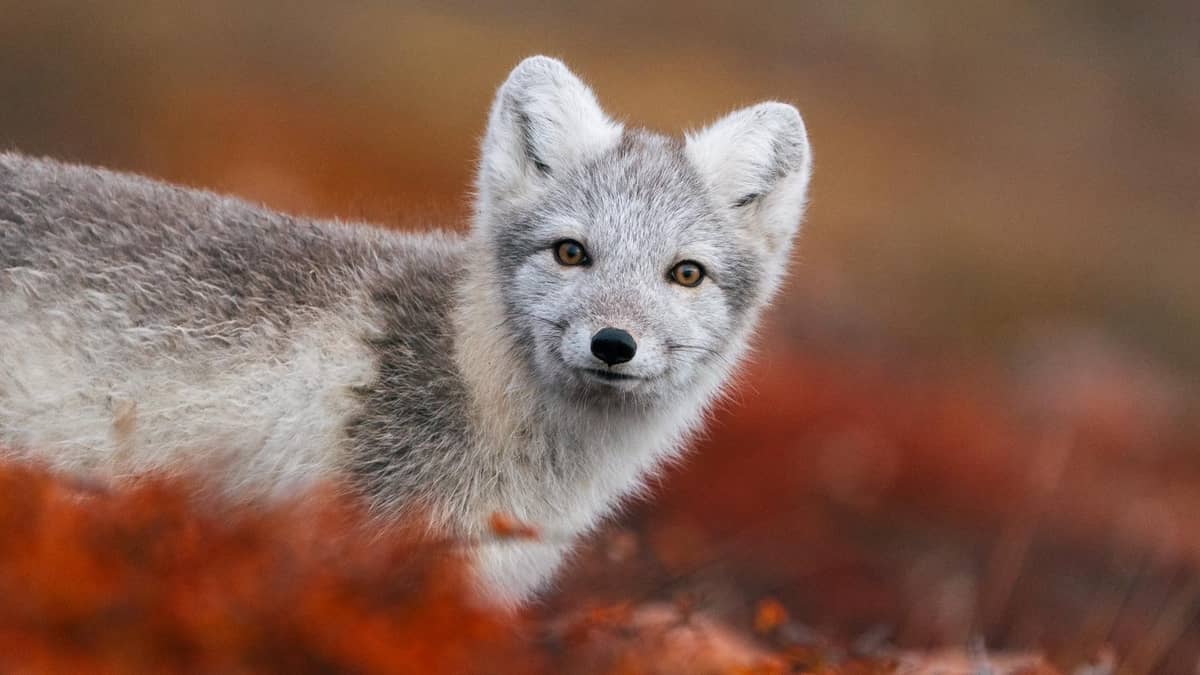
People arrived on Svalbard only a few centuries ago, and polar bears soon became a prize. A period of intensive hunting in and around Svalbard began about 1870, and in the following 100 years an average of some 300 bears were killed each year.9 Norwegian overwintering hunters and trappers worked the islands from 1850 to 1973, taking polar bears and Arctic foxes for their thick winter furs.21
The most famous of them, Henry Rudi, known as the Polar Bear King, killed around 750 polar bears in the archipelago, including 115 in a single year.22 Trapping huts still stand along Svalbard's coasts, reminders of a hard way of life that lasted for generations and is still part of local identity. For the bears, those decades of steady hunting pushed the population down for generations.
Protection came in 1973. Polar bears have been protected by international law since that year, and hunting has been completely banned on Svalbard since the same year.10 The population probably increased considerably in the years after the ban.5 A survey of the Norwegian part of the population in August 2015 showed no sign of a reduction in population size.11 Protection worked, and it still does.
Today the polar bears of Svalbard live under strict protection. The Svalbard Environmental Act forbids disturbing, attracting or pursuing them without need.23 Since 1 January 2025 everyone must keep at least 300 meters away, and from 1 March to 30 June at least 500 meters.2425 A bear on Svalbard is a wild animal in its own range, and visitors meet it on its terms, from a respectful distance.
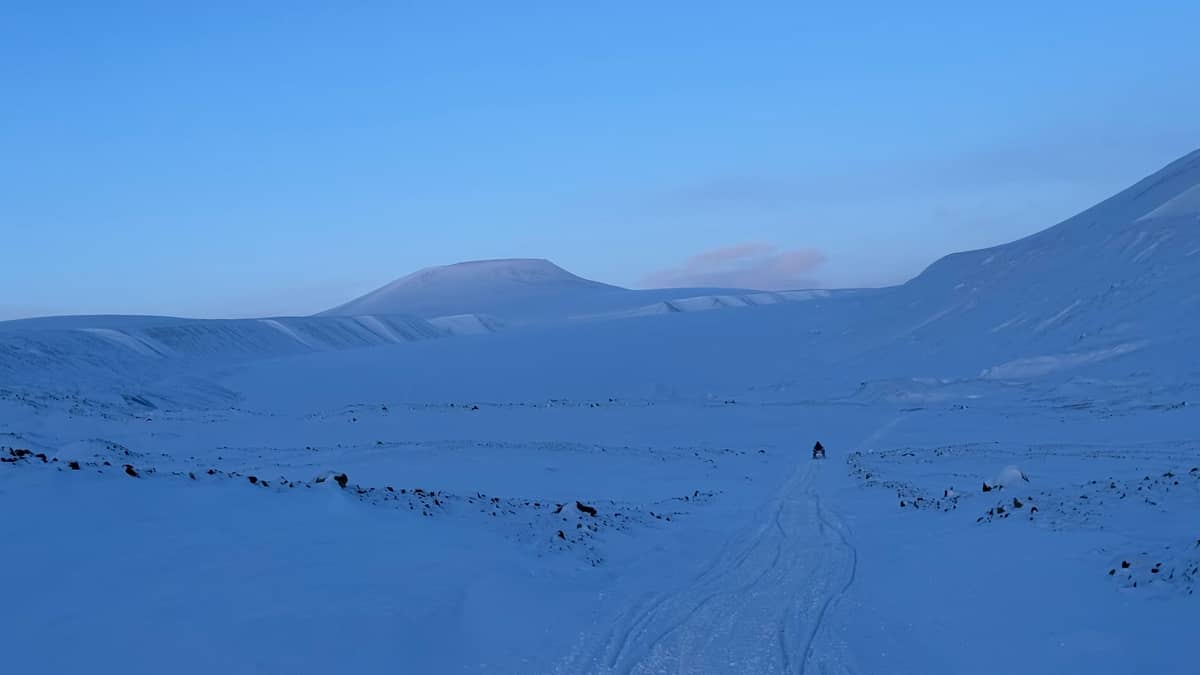
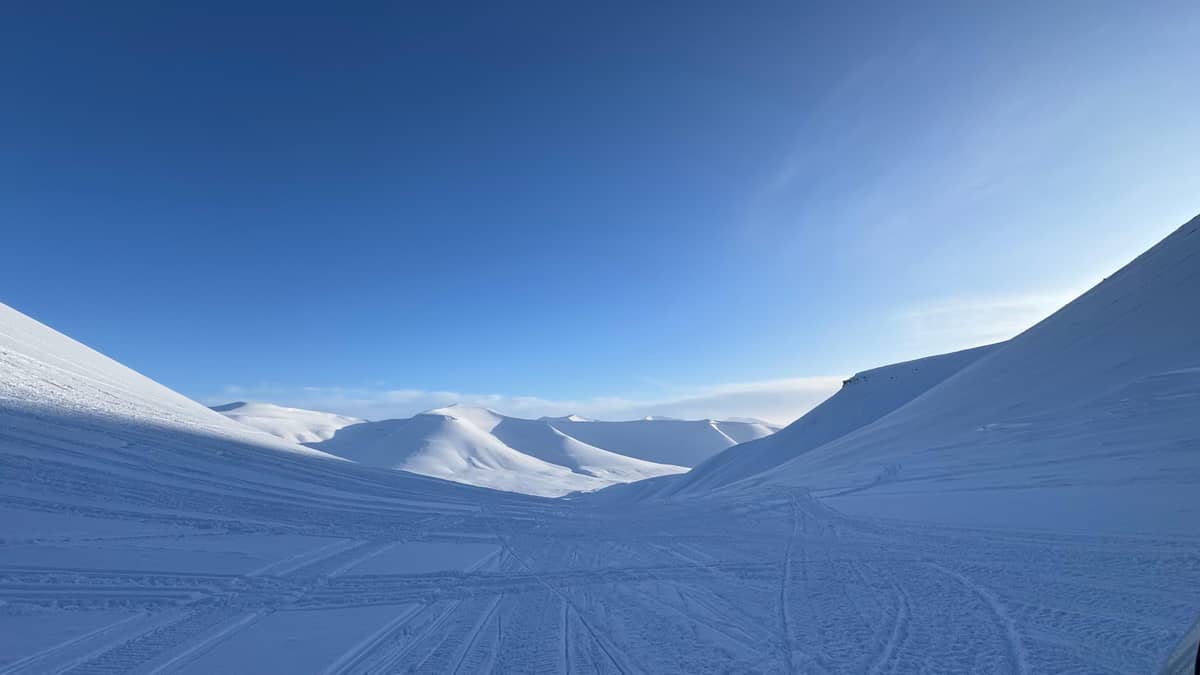
There are no organised tours on Svalbard aimed at seeking out polar bears.26 What you can book are guided days in the landscapes bears have used for more than 110,000 years.13 The snowmobile day booked through this site heads into Reindalen and towards Van Mijenfjorden for 8 hours with a local guide, from $718 per person. In summer, boat trips follow the coasts and fjords instead.
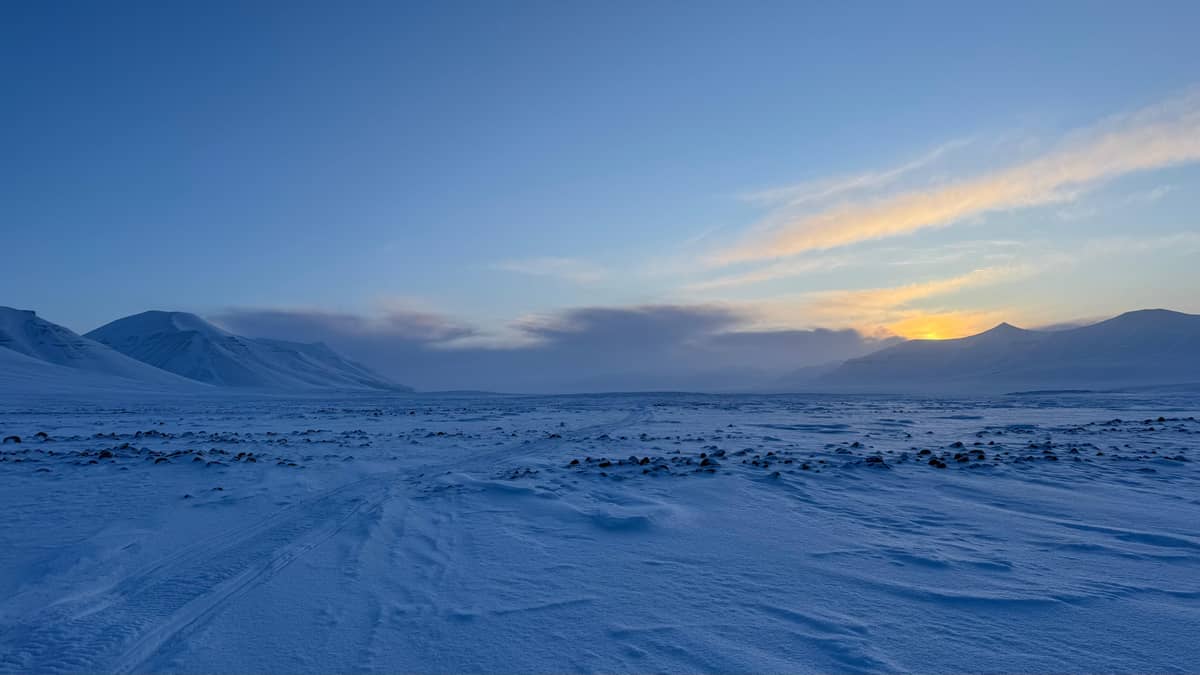
Van Mijenfjorden became a national park to protect one of the last fjord areas on Svalbard's west side that still has stable sea ice.27 Standing on that ice, with mountains on every side, you are in the kind of place where the polar bear's story has unfolded for ages. Whether or not a bear appears, it is a fine way to connect with that long history and to understand why the ice matters this much.
Book your day
Hold your place now, pay nearer the time, and cancel free up to a day before.
Across the sea ice. Polar bears depend on sea ice to move, and some still travel between Svalbard and Franz Josef Land.12
At least 110,000 years. A polar bear jawbone found on Svalbard is 130,000 to 110,000 years old.3
At Poolepynten. It came from Prins Karls Forland, on the far western edge of Svalbard.15
Yes. Genetic studies show polar bears evolved from within brown bears.4
Yes, some migrate. About 300 stay all year; others move between Svalbard and Franz Josef Land.2
In 1973. Hunting was banned and the population probably increased considerably afterwards.5
No sign in 2015. The 2015 survey of the Norwegian part found no reduction in population size.11
Sources
Keep reading